Notebook / Exhibition essay
I wanted a website to behave like an exhibition.
Before HAUSE was a design system for AI, it was a way of staging ideas.
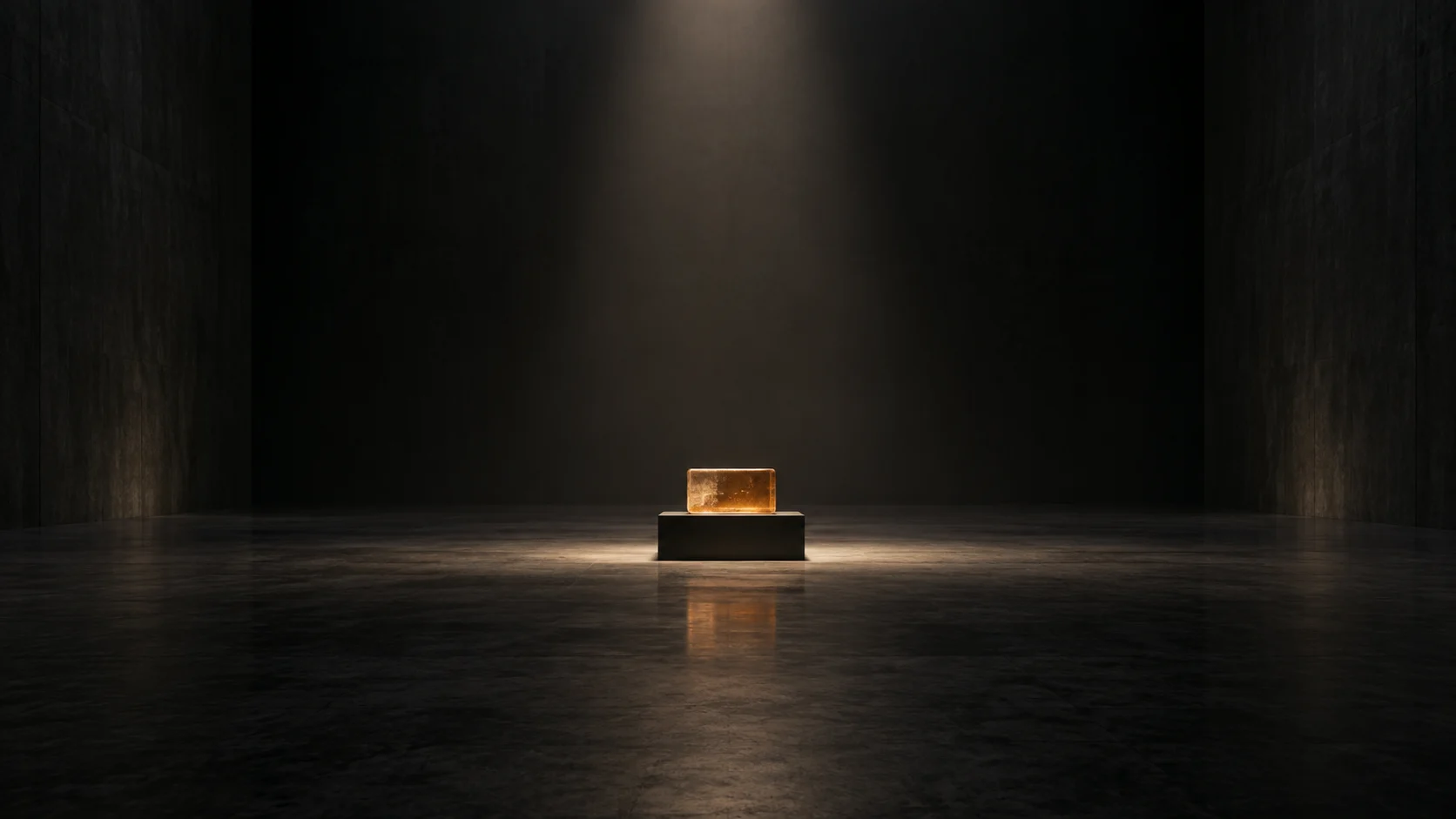
The room is part of the story.
01 / THE INFLUENCE
I have always been more interested in exhibitions than interfaces: fashion shows, galleries, film and editorial. A room can make one object enormous and another almost disappear. It can make the walk towards something part of understanding it. Dior’s scenography and Burberry’s show environments are useful references because they direct attention and supply context; they are not a mood board for decorative luxury styling.
02 / DIRECTING ATTENTION
Software inherited the vocabulary of application interfaces. I wanted some of the vocabulary of exhibitions: not just where an idea sits, but when and how it meets the reader. Not everything receives the same amount of space. Not everything arrives at once. Sometimes the room is the argument; sometimes the absence before an object matters almost as much as the object itself.
THREE REFERENCES / THREE PRINCIPLES
The exhibition directs attention.
Circulation can also be theatre.
VISUAL STUDY · NOT A REPRODUCTION ↗02 — BURBERRY / SUMMER 2026The environment is part of the story.
The world around an object changes it.
VISUAL STUDY · NOT A REPRODUCTION ↗03 — DIOR / CRAFTING FASHIONThe visitor moves through an argument.
Seven sections. New perspectives. Transformation.
VISUAL STUDY · NOT A REPRODUCTION ↗Six different acts. One shape.
NO GENERIC CARD KIT
- requested Card
- needed a claim, evidence, a question, a comparison
The content changes. The grammar should be allowed to change with it.
COMPARISON
REFUSAL05 / THE ACT BEFORE THE SHAPE
Maybe Card describes the shape of something after the interesting decision has already happened. What matters first is the act. Is this making a claim, showing evidence, asking a question, comparing interpretations, revealing a process or refusing to say something unsupported? Those are not interchangeable styles. They are different parts of a story.
The instinct was there from the beginning.
A cinematic visual language for ideas, systems and explanations.
HeroStatementObservationClaimEvidenceQuestionTimelineConnectionFilmComparisonFollowRevealEVIDENCE
The exhibition thesis precedes the AI framing
HOUSE commit 48070bd records the cinematic description and no-card principle at 00:40 BST on 29 August 2026 (23:40 UTC on 28 August). The first hause.design commit followed at 14:37 BST and called itself the design system exhibited in the design system. The explicit design-system-for-AI framing appears later that day in site commit 01da778.
The design system
exhibited in the design system.
The material tells you what the room needs to become.
Read.
A sentence. A claim. Evidence. A question.
Operate.
Pull apart. Compare. Change the lens.
Watch.
Transform. Unfold. Process. Change magnitude.
THE SAME WORDS / DIFFERENT RESPONSIBILITIES
The words stay the same. The reading changes.
The exhibition thesis came first.
28 August 2026, 23:40 UTC — the first HOUSE README called it a cinematic visual language for ideas, systems and explanations.
Can an AI learn to stage an idea?
CLAIM
The exhibition thesis came first.
EVIDENCE
The first HOUSE README
28 August 2026, 23:40 UTC — the first HOUSE README called it a cinematic visual language for ideas, systems and explanations.
Can an AI learn to stage an idea?
The words stay the same. A claim takes a position. Evidence supports it. A question stays open.
- 01Arrival
- 02Attention
- 03Reveal
- 04Contrast
- 05Movement
- 06Resolution
- 01Hero
- 02Statement
- 03Instrument
- 04Comparison
- 05Performance
- 06Answer
An editorial relationship, not a historical one-to-one.
EXHIBITION → CINEMATIC COMPOSITION → FORMS → SEMANTIC FORMS → AI COMPOSITION — the artistic problem becomes a systems question.
The space between two states has meaning.
- 01Exit.
The claim leaves.
- 02Hold.
A beat of empty space.
- 03Enter.
The evidence arrives.
The empty beat says that the first state has ended.
DISCOVERED THROUGH MAKING
Writing this page changed the system. It needed rooms, archival space and a transition with a held absence. Those needs became shared HAUSE forms. The language grew because there was something to show.
THE QUESTION CHANGED
How should I stage this idea?↓Can an AI learn to stage an idea?
The next question is whether a model can choose among semantic forms because it understands the communicative act, rather than because a keyword happened to match. That turns an artistic instinct into something the system can test.
The references behind the rooms.
The archive, the comparison and the performance notes. These are records of the design argument, with their original references attached.
01Authored observation06 / THE FIRST RECORDThe first HOUSE repository record already described a cinematic visual language for ideas, systems and explanations. Its vocabulary included Hero, Statement, Timeline, Co…Open the passage
The first HOUSE repository record already described a cinematic visual language for ideas, systems and explanations. Its vocabulary included Hero, Statement, Timeline, Connection, Film, Comparison and FollowReveal. Its design principles refused a generic card kit and said new forms should be built because a real exhibition needed them, not because a taxonomy had a gap.
Passage 9 in the full manuscript ↗02Authored evidenceThe exhibition thesis precedes the AI framingOpen the passage
SUPPORTED
The exhibition thesis precedes the AI framing
HOUSE commit 48070bd records the cinematic description and no-card principle at 00:40 BST on 29 August 2026 (23:40 UTC on 28 August). The first hause.design commit followed at 14:37 BST and called itself the design system exhibited in the design system. The explicit design-system-for-AI framing appears later that day in site commit 01da778.
03Authored comparisonThe words stay the same. The reading changes.As containers / As semantic formsOpen the passage
As containers
- The exhibition thesis came first.
- 28 August 2026, 23:40 UTC — the first HOUSE README called it a cinematic visual language for ideas, systems and explanations.
- Can an AI learn to stage an idea?
As semantic forms
- The exhibition thesis came first.
- 28 August 2026, 23:40 UTC — the first HOUSE README called it a cinematic visual language for ideas, systems and explanations.
- Can an AI learn to stage an idea?
04Authored observation11 / EXIT · HOLD · ENTERCinematic can become an excuse for gratuitous motion. That is not the point. HAUSE stages a change when the relationship requires it: exit, a held beat, enter. A crossfad…Open the passage
Cinematic can become an excuse for gratuitous motion. That is not the point. HAUSE stages a change when the relationship requires it: exit, a held beat, enter. A crossfade can suggest two physical states coexist; an authored absence can say that one has ended before another begins. The transition is part of the explanation, while reduced motion and no JavaScript retain a designed resting state.
Writing this page changed the system. It needed rooms, archival space and a transition with a held absence. Those needs became shared HAUSE forms. The language grew because there was something to show.
HAUSE / the contribution this page made ↗
Passage 17 in the full manuscript ↗Lookbook / Working draft
Closing reflection
A website can stage an idea through the form its information needs: evidence, uncertainty, transformation and refusal each deserve a distinct voice. Making the notebook extended HAUSE’s shared language.
Read the complete manuscript
Before HAUSE was a design system for AI, it was a way of staging ideas.
Working manuscript · v0.1
01 / THE INFLUENCE
I have always been more interested in exhibitions than interfaces: fashion shows, galleries, film and editorial. A room can make one object enormous and another almost disappear. It can make the walk towards something part of understanding it. Dior’s scenography and Burberry’s show environments are useful references because they direct attention and supply context; they are not a mood board for decorative luxury styling.
02 / DIRECTING ATTENTION
Software inherited the vocabulary of application interfaces. I wanted some of the vocabulary of exhibitions: not just where an idea sits, but when and how it meets the reader. Not everything receives the same amount of space. Not everything arrives at once. Sometimes the room is the argument; sometimes the absence before an object matters almost as much as the object itself.
Cinematic does not mean motion. It means directing attention through time.
03 / THE DESIGN PROBLEM
I was not looking for a website covered in animation. I wanted control of arrival, pace, scale, interruption, contrast and reveal: the tools a filmmaker or exhibition designer uses to shape attention. The vocabulary available to software seemed to collapse those decisions into containers.
NO GENERIC CARD KIT
- requested Card
- needed a claim, evidence, a question, a comparison
The content changes. The grammar should be allowed to change with it.
04 / WE GAVE IT RECTANGLES
Hero. Card. Card. Card. Call to action. Footer. Change the radius, colour or shadow; make one card larger. The content changes while the grammar barely does. Once AI started generating interfaces, the limit became easier to see. Give a model a conventional component library and it will produce a competent wall of rectangles. It is using the language it was given.
05 / THE ACT BEFORE THE SHAPE
Maybe Card describes the shape of something after the interesting decision has already happened. What matters first is the act. Is this making a claim, showing evidence, asking a question, comparing interpretations, revealing a process or refusing to say something unsupported? Those are not interchangeable styles. They are different parts of a story.
06 / THE FIRST RECORD
The first HOUSE repository record already described a cinematic visual language for ideas, systems and explanations. Its vocabulary included Hero, Statement, Timeline, Connection, Film, Comparison and FollowReveal. Its design principles refused a generic card kit and said new forms should be built because a real exhibition needed them, not because a taxonomy had a gap.
EVIDENCE
The exhibition thesis precedes the AI framing
HOUSE commit 48070bd records the cinematic description and no-card principle at 00:40 BST on 29 August 2026 (23:40 UTC on 28 August). The first hause.design commit followed at 14:37 BST and called itself the design system exhibited in the design system. The explicit design-system-for-AI framing appears later that day in site commit 01da778.
07 / THE SPECIMEN BOOK
The first hause.design commit called the site the design system exhibited in the design system. Its front door led into a book divided by mode—Statements, Instruments and Performances—rather than a documentation sidebar. The site was not explaining an exhibition metaphor from outside. It was using the language to exhibit itself.
08 / THREE ROOMS
A Statement occupies attention. An Instrument lets the reader investigate. A Performance controls sequence. Read. Operate. Watch. Together, they give the system a way to compose attention through space and time. The categories appeared after real pages needed different ways of explaining things. The material asked for the rooms; the library named them afterwards.
ONE OBJECT · TWO INTERPRETATIONS
The words stay the same. The reading changes.
The exhibition thesis came first.
28 August 2026, 23:40 UTC — the first HOUSE README called it a cinematic visual language for ideas, systems and explanations.
Can an AI learn to stage an idea?
The exhibition thesis came first.
28 August 2026, 23:40 UTC — the first HOUSE README called it a cinematic visual language for ideas, systems and explanations.
Can an AI learn to stage an idea?
09 / THE QUESTION CHANGED
The original problem was artistic: how should I stage this idea? Working increasingly with AI turned it into a systems question: how does a machine know how to stage this idea? A human designer can decide that one sentence deserves an entire screen. A model needs a language for making that decision. Twenty variants of Card do not provide it; communicative acts might.
Not every idea deserves a card. Some deserve a room.
10 / INFORMATION HAS DRAMATURGY
An uncertainty should not look like a conclusion. Evidence should not have the same voice as an assertion. A transformation may be clearer when it happens rather than when it is described. A refusal should stand confidently on the page instead of hiding inside an error message. The ambition is not merely for an AI to assemble a valid interface, but to recognise that information has dramaturgy.
11 / EXIT · HOLD · ENTER
Cinematic can become an excuse for gratuitous motion. That is not the point. HAUSE stages a change when the relationship requires it: exit, a held beat, enter. A crossfade can suggest two physical states coexist; an authored absence can say that one has ended before another begins. The transition is part of the explanation, while reduced motion and no JavaScript retain a designed resting state. Writing this page changed the system. It needed rooms, archival space and a transition with a held absence. Those needs became shared HAUSE forms. The language grew because there was something to show.
Can an AI learn to stage an idea?
The next question is whether a model can choose among semantic forms because it understands the communicative act, rather than because a keyword happened to match. That turns an artistic instinct into something the system can test.
Lookbook / Working draft
Closing reflection
A website can stage an idea through the form its information needs: evidence, uncertainty, transformation and refusal each deserve a distinct voice. Making the notebook extended HAUSE’s shared language.