A 1979 language, a coding agent, and a misprint a reader had already caught in 1980.
Published manuscript · v1.1
01 / WHAT I ASKED
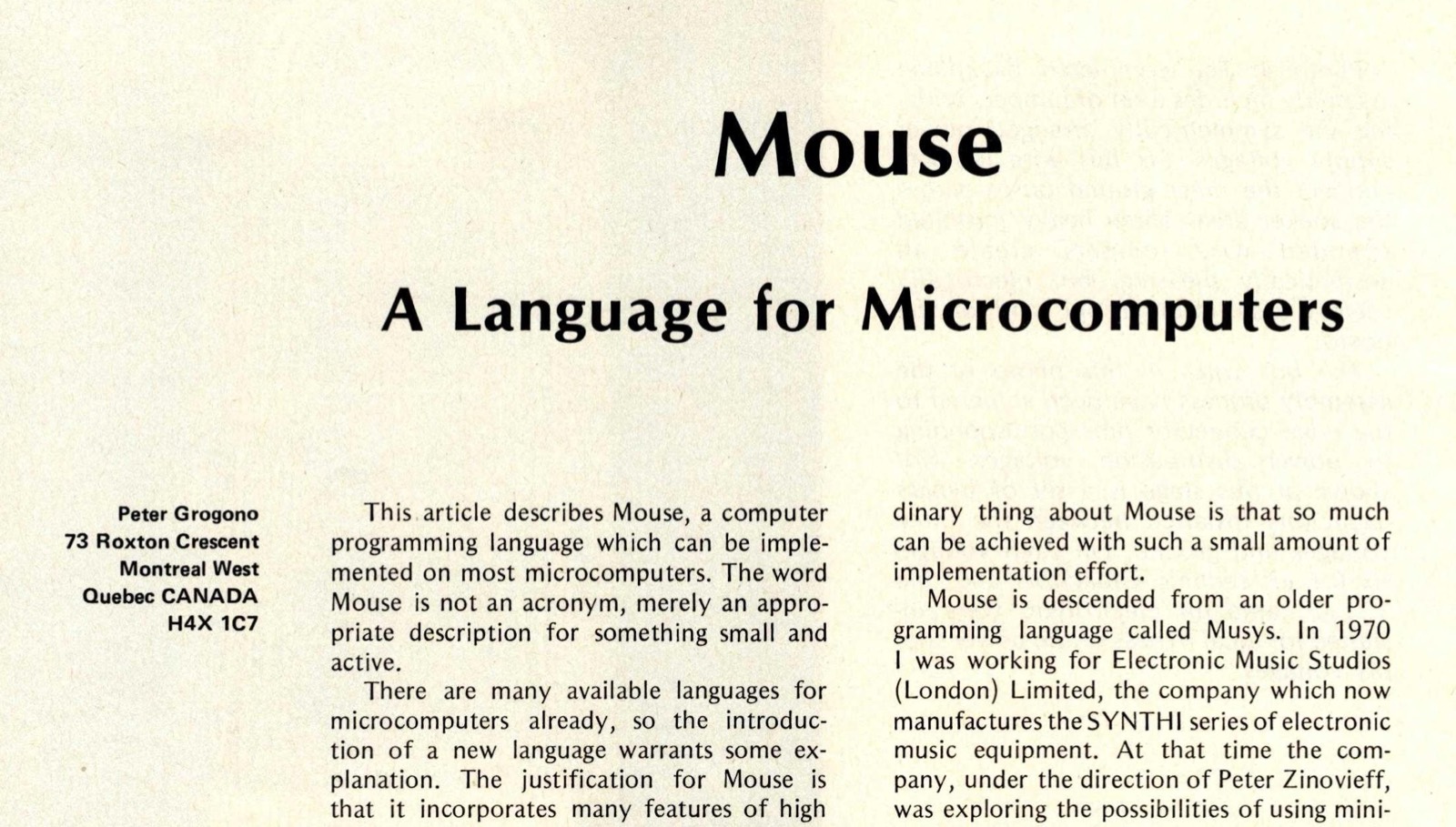
Mouse is a programming language that fits on a magazine page. Peter Grogono published it in BYTE in July 1979, with the interpreter printed as 198 lines of Pascal. I had a C version of it and an unfinished Rust port of my own. I asked a coding agent to finish the port, using the C as the reference.
02 / IT MATCHED
The agent finished the port and compared it with the C on every example I had. The output was identical, byte for byte. Every example I had only printed text.
03 / BELIEVE, BUT DID NOT CHECK
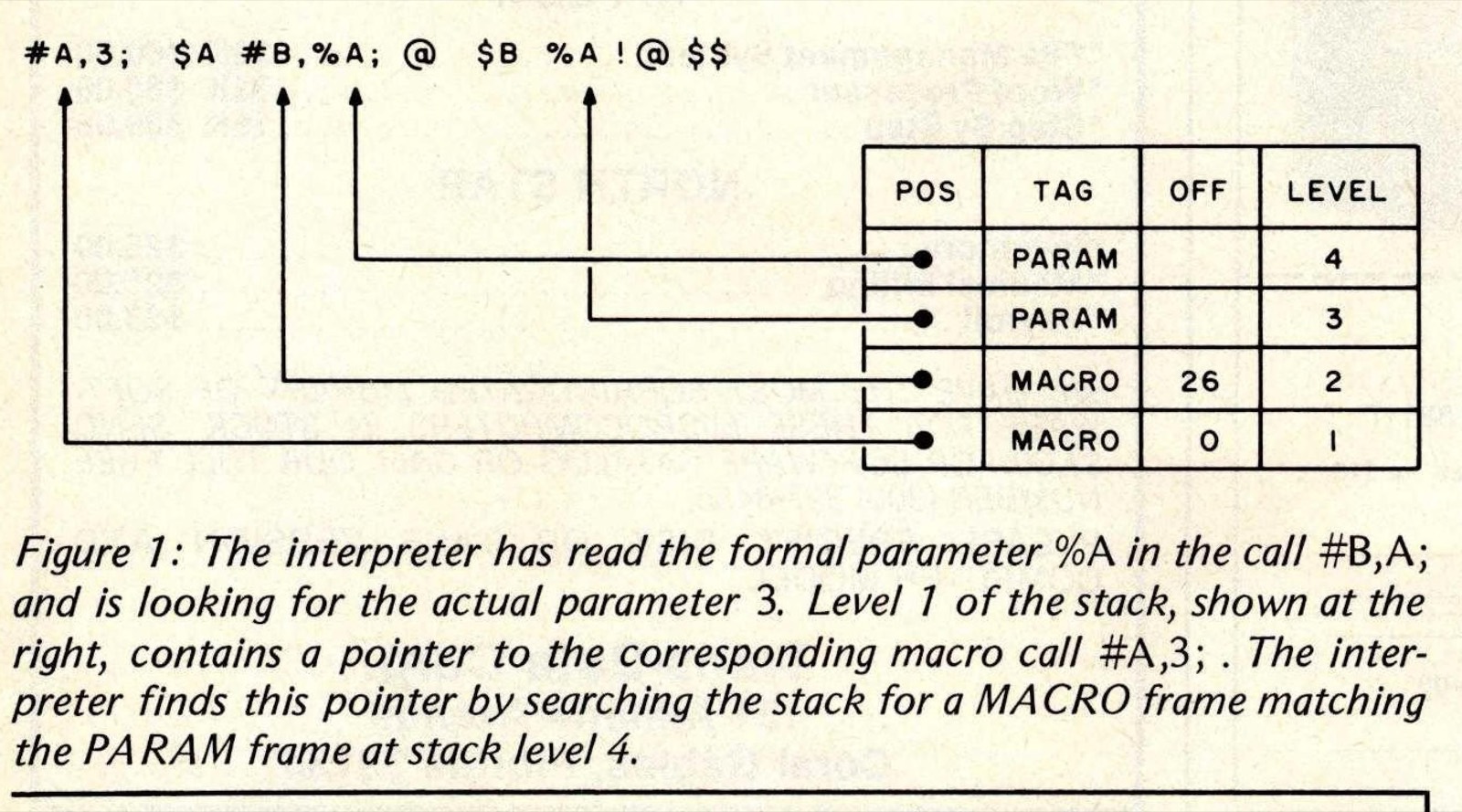
The agent’s report listed the places where it had chosen not to copy the C. One was the code that finds a macro’s parameter: “I used an increment, which I believe matches Grogono’s original listing but did not check against a source.” So I asked it to check against the magazine, not against the C.
04 / LINE 176
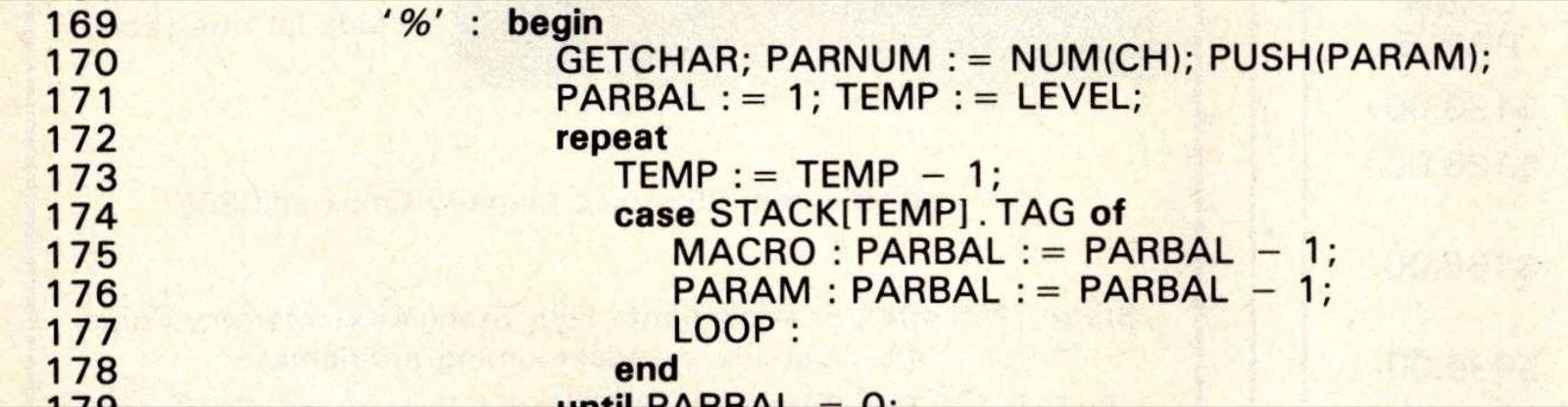
The printed listing has the same subtraction as the C. Lines 175 and 176 both take one away, and the article’s own explanation only works if one of them adds. The agent had guessed right, and the C carries the same minus as the misprint.
05 / A READER, TWO EVENINGS
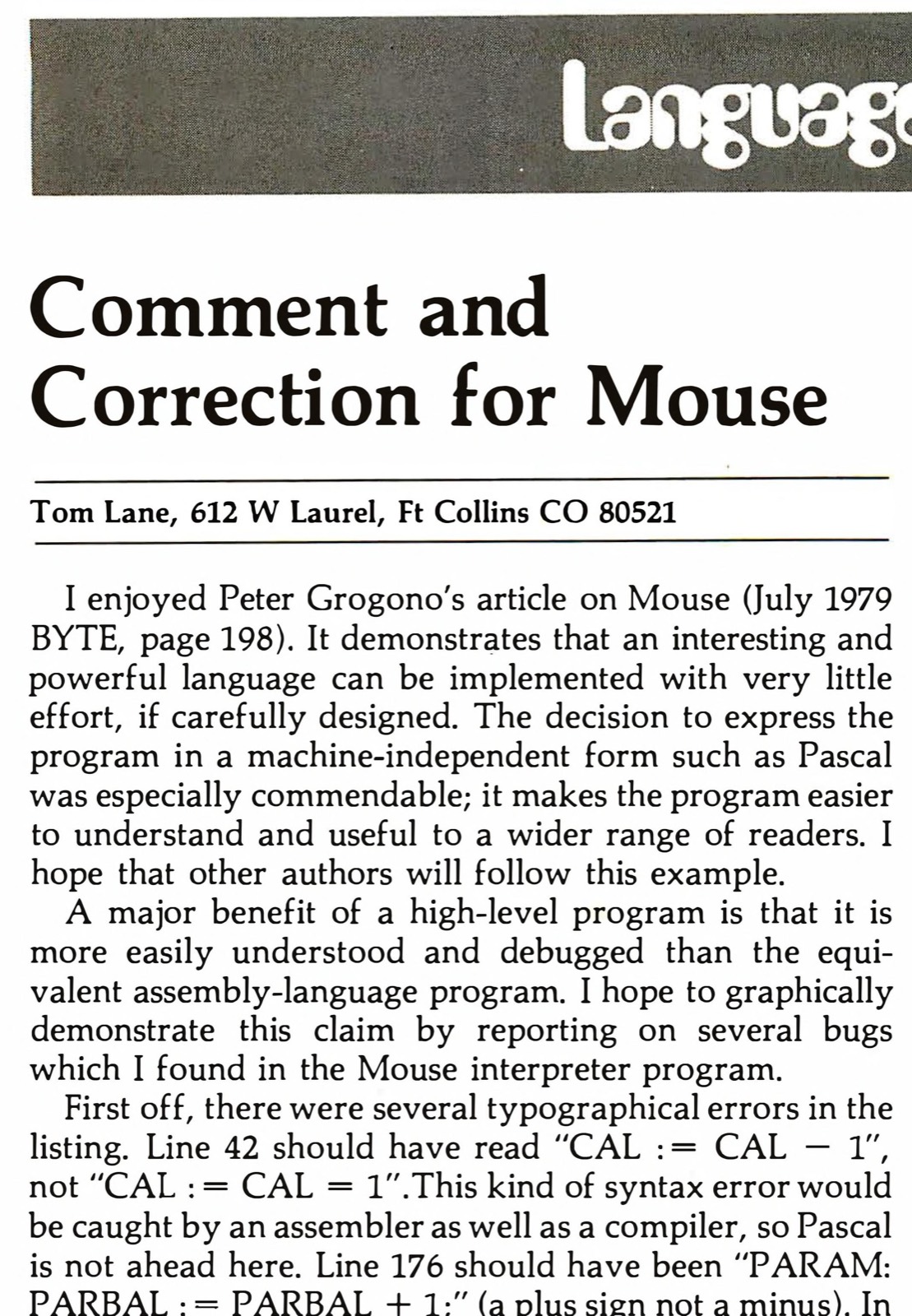
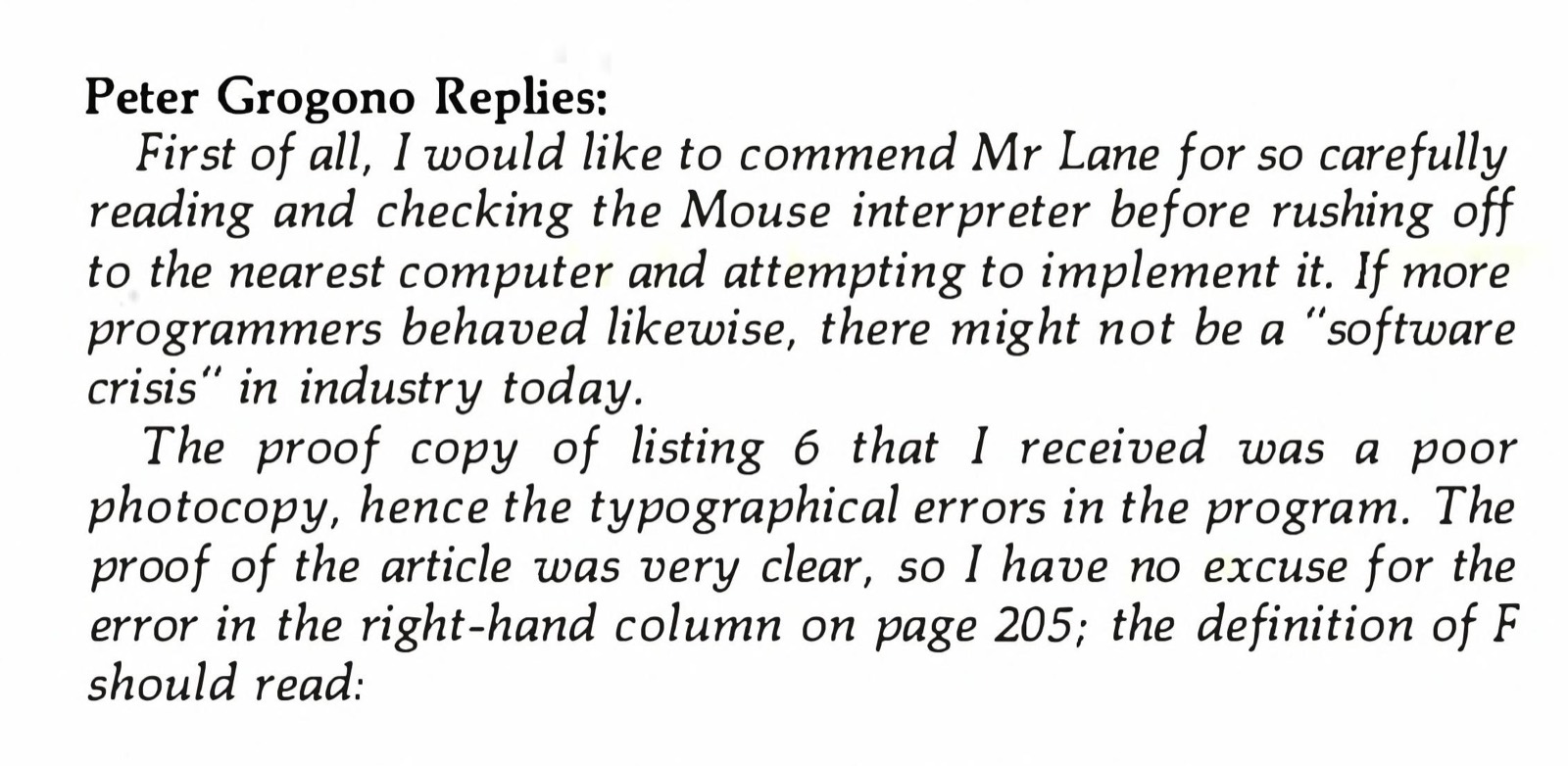
Somebody had already noticed. In June 1980 BYTE printed a letter from a reader, Tom Lane: line 176 should have a plus sign, not a minus (one of several misprints), and there were three further bugs in the logic. He found them “during two evenings of studying the interpreter listing, with no machine use whatever.” Grogono replied that they were “all genuine bugs”, and that the misprint came from a poor photocopy of the proof. The correction was in print within a year. It did not reach the C.
06 / THIRTY-THREE OR ONE
The agent had guessed the misprint. This bug it copied from the C without knowing it was there. With Lane’s corrections in, the port prints 1, and the article’s example listings run as described, with two exceptions that are the article’s own: listing 5, the bubble sort, fails when given fewer than two numbers, and the array program on page 204 reads with one full stop too many and accepts a twenty-sixth number where its text says twenty-five. Listing 2, which runs for ever, prints primes until it is stopped.
The corrected interpreter runs in the browser, compiled from the same Rust source as the command-line version. Lane’s test is one of the examples.
WHAT THIS DOES NOT SHOW
- The agent did not discover these bugs. Tom Lane did, and they were in print by 1980.
- This is one port in one session. It says nothing general about how often an agent copies a reference’s mistakes.
- I have not established where the C version came from, only that it has the same subtraction as the printed listing.
- A second model, OpenAI’s Codex, later reviewed the repository independently. It found the slips in the bubble sort and the array program, and that the examples had added spaces to the printed prompts. The examples now keep the printed strings, each change is listed, and the review and what was done about each point are in the repository.
Matching a reference is evidence about the port. It is not evidence about the reference.
When a port matches its reference, who checks the reference?
Two habits came out of this: asking the agent what it did not check, and asking what the reference was copied from. Whether either would have been enough without a reader’s letter from 1980 is not something this note can answer.
Thematic notebook / Published record
Closing thought
A port can match its reference exactly and still be wrong, because the reference was. The agent guessed one inherited misprint and said it had not checked; it copied three other bugs without knowing they were there.