A computer you talked to at a typewriter, rebuilt from RAND’s papers by a coding agent and replayed against the pages it typed. A year in, it began to say I, for the reason chat assistants do.
Published manuscript · v1.2
01 / A COMPUTING AIDE
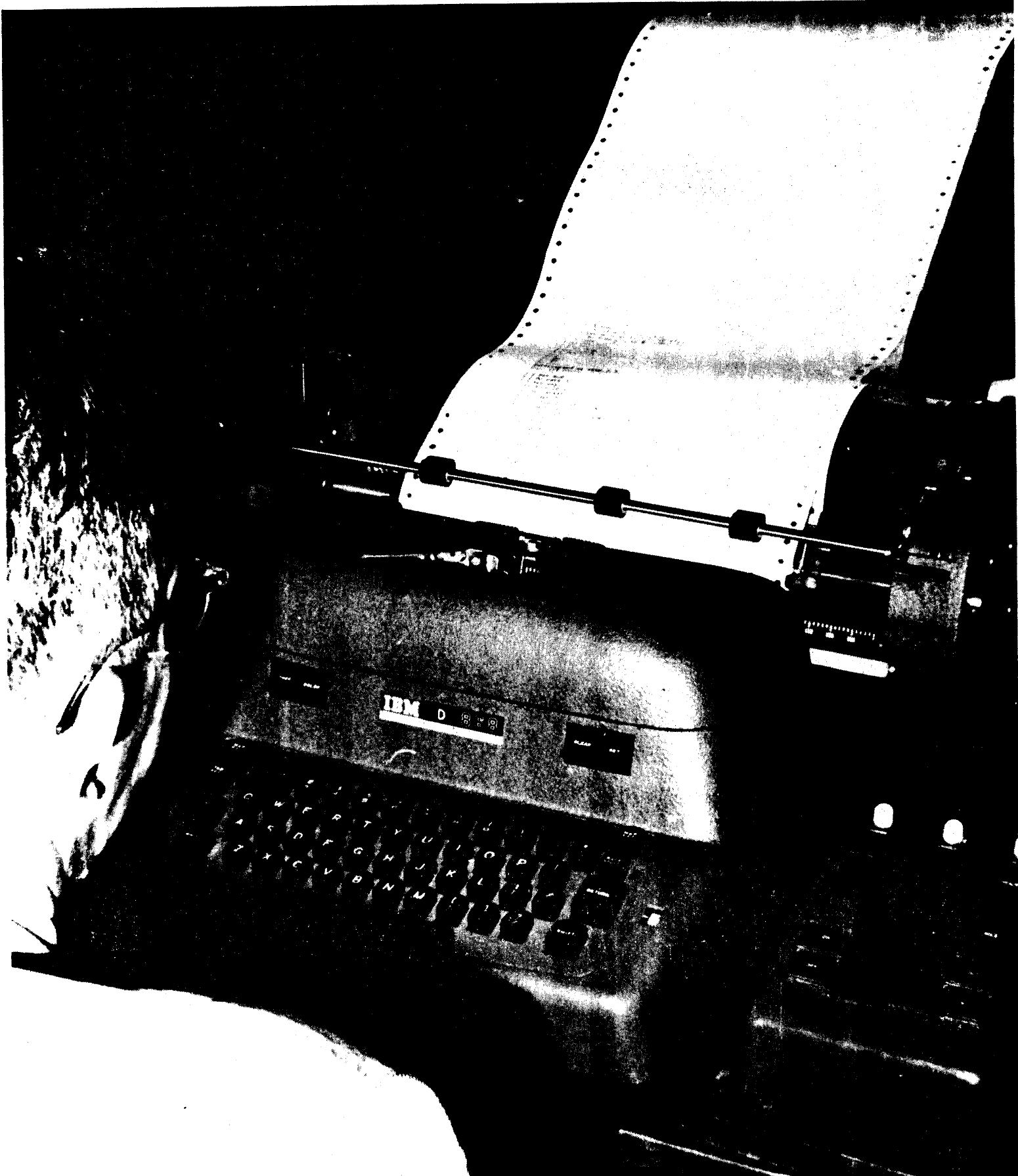
JOSS ran on the JOHNNIAC at RAND from 1963. You sat at an electric typewriter with a two-colour ribbon and typed a line in green; JOSS did what it said, or kept it as a step of a program, and answered in black. J. C. Shaw, who wrote it, wanted the user to “interact with JOSS as with a computing aide”. I asked a coding agent to rebuild the JOSS of 1964 and 1965 from RAND’s scanned papers, and to hold it to one test: type the sessions printed in those papers again, and get the same page.
Shaw, JOSS: Experience with an Experimental Computing Service, P-3149, May 1965 ↗
02 / GO
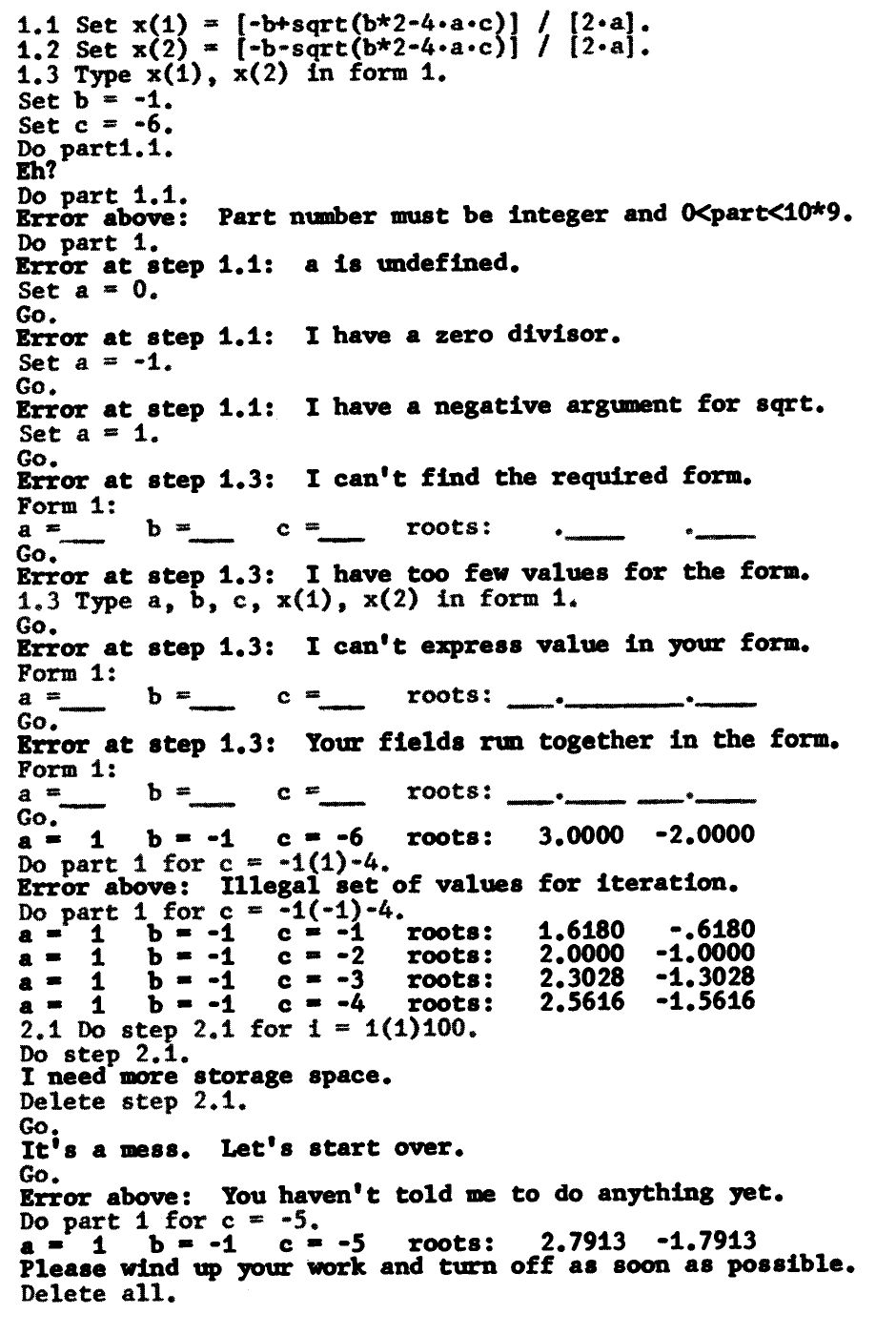
The session that mattered most is figure 2 of Shaw’s 1965 paper. A user sets out to solve a quadratic equation and gets nine things wrong, one after another. The first two are typing slips, put right by typing the line again. Then the program runs, and seven times it stops. A value is missing. A divisor is zero. The argument of a square root is negative. The form for the answers does not exist, then is given too few values, then has no room for them, then has blanks that touch. Each time JOSS says what is wrong and stops where it is. The user puts that one thing right and types Go. The program is never started again from the top. A parser and an evaluator do not get you this. The task has to be kept, broken off in the middle of a step, while the user changes the program underneath it.
03 / FORTY MESSAGES, FOURTEEN IN PRINT
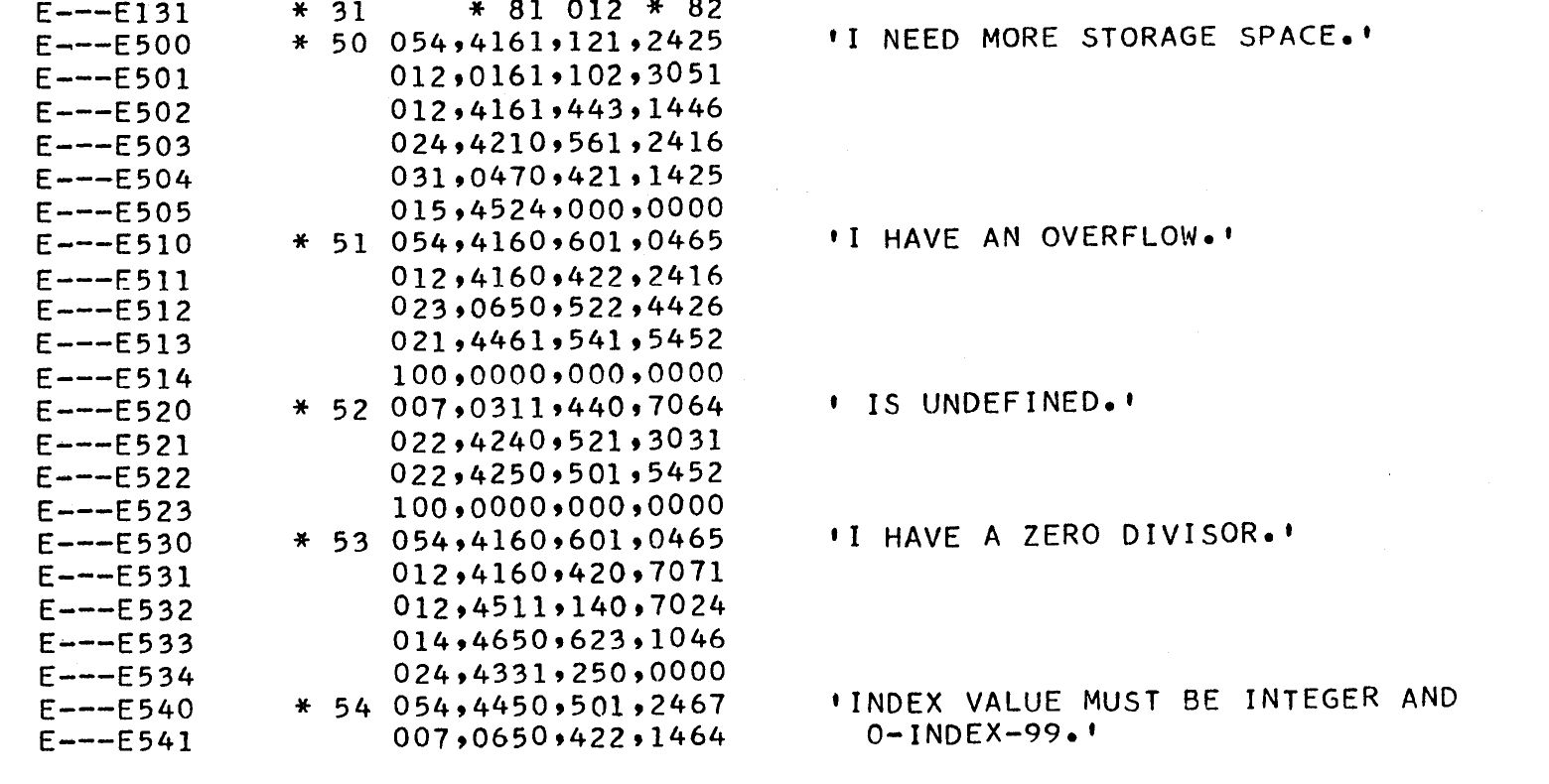
Shaw wrote that JOSS “simply selects from a stock of forty ‘canned’ messages”. Figure 2 alone shows fourteen of them, and the papers between them not many more. The rest were not lost. A listing of the program survives, headed in his hand “JOSS 666” and “JCS 1-9-65”, and it holds each message as octal numbers, five characters to a word. The agent decoded them with the listing’s own table of characters. There are forty.
04 / TWO JOSSES
The first replays would not settle, because the pages disagree with each other. A film made in March 1964 has JOSS say “Zero divisor.” The paper of May 1965 has “I have a zero divisor.” Shaw explains it: “After a year’s experience with neutral, impersonal messages, we introduced personal pronouns and some informal diction.” And why: “This was done not facetiously, but rather to reinforce the model.” The model was a person. JOSS, he says on the same page, cannot carry on a real conversation and picks from forty canned messages, “But the timeliness and appropriateness of its remarks give a feeling of interacting with a person.” So in 1965 the computer began to say I, to feel like someone you were talking to. Every chat assistant makes the same choice now. The wording was not all that changed. In the pages of 1965 every answer typed without a form sits one column further to the right than in 1964. And the JOSS of the film types one fiftieth as 2·10*(-2), where by 1965 a number that small is typed as .02. So the reconstruction has a year. A session from one does not replay on the other.
05 / WHAT THE REPLAY FOUND IN THE FILM
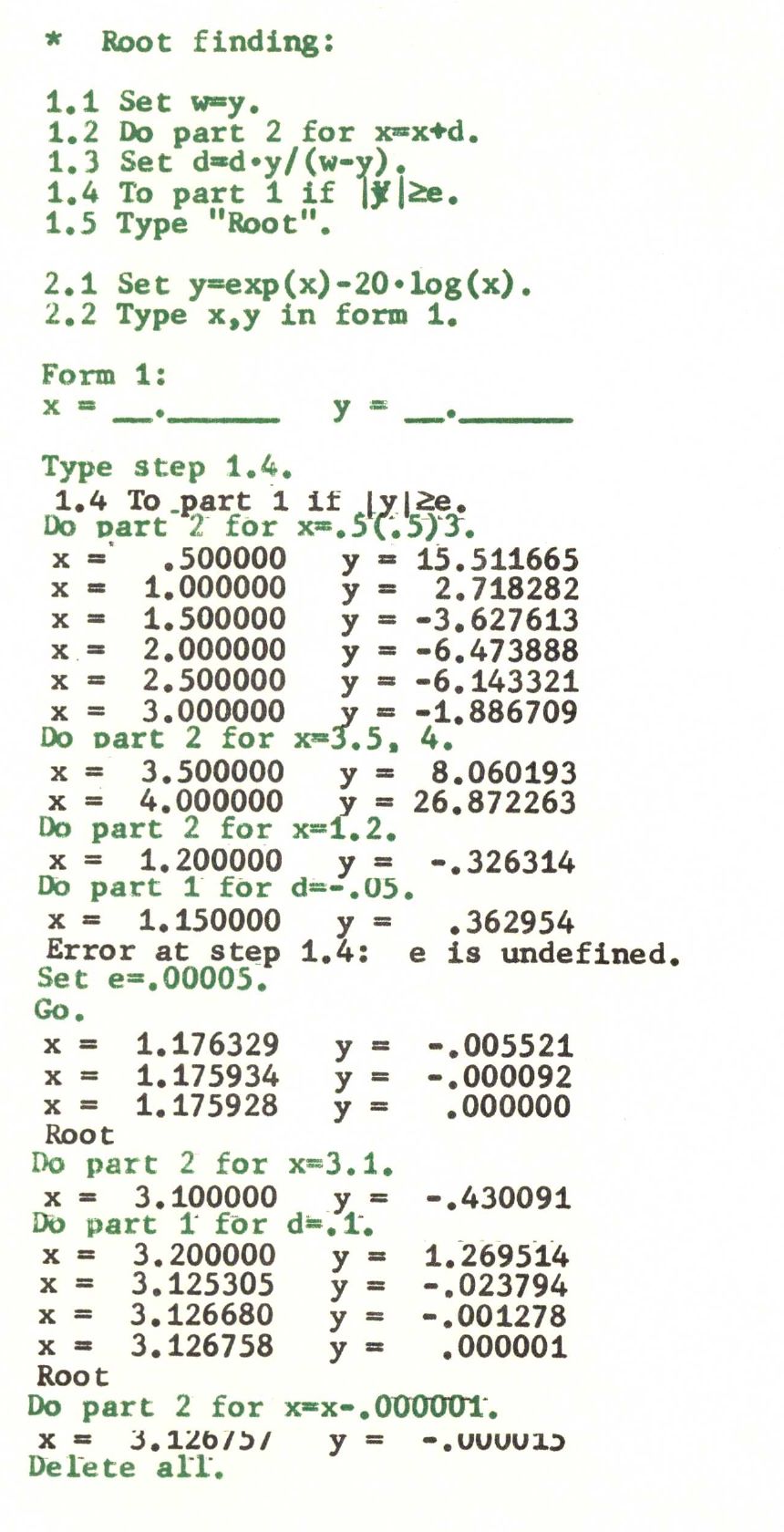
The film’s scenario was printed as a report, with the typewriter’s real output pasted in as figures. Replayed as printed, it goes wrong halfway: a listing in the report shows none of the first program’s steps, though nothing typed before it removes them. Something like a Delete all was cut from the scenario. The report also has a comma that the listing of the same step does not have, a space where there should be a multiplication dot, and an answer labelled without the space the user typed. With those four put right, and a decimal point the scan has lost from a form restored, each marked, it replays.
06 / FIVE LINES
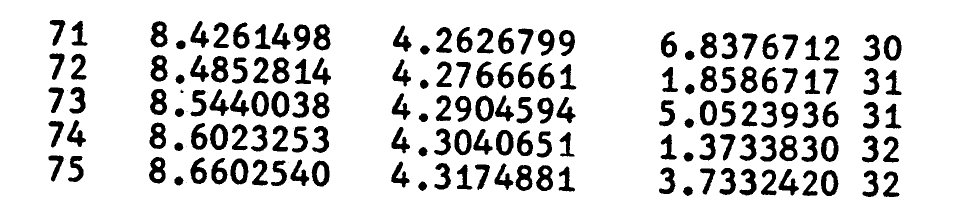
The five transcripts have 385 lines typed by the user and 767 typed by JOSS that the pages show, not counting the blank lines of pages a typist had copied. All 767 come out the same: 689 column for column against the typewriter’s own output, and the rest against pages a typist had copied, where only the characters can be compared. Five of them took more than a modern library, and they are all the same kind of thing. The page has log 2 as .69314718, three times, and the correctly rounded figure ends in a 1. It has one long expression ending in 357 where the reconstruction gets 356. And in a table of a hundred exponentials, the row for 72 ends in a 7. JOSS rounded to nine digits and then to the form, and a correct exponential, rounded that way, gives an 8. Each is one unit in the last digit, of a logarithm, an exponential, or a power worked out through both. With a correctly rounded library, all five came out one unit away. So the agent followed JOSS’s own routines from the listing of January 1965, card by card. Its logarithm, for a result below 1, multiplies out nine digits and does not round them: log 2 is .69314718056, and cut off it is .69314718. Its exponential and its powers, followed the same way, give the 7 in the row for 72 and the 357. All five come out as printed.
07 / CHECK IT
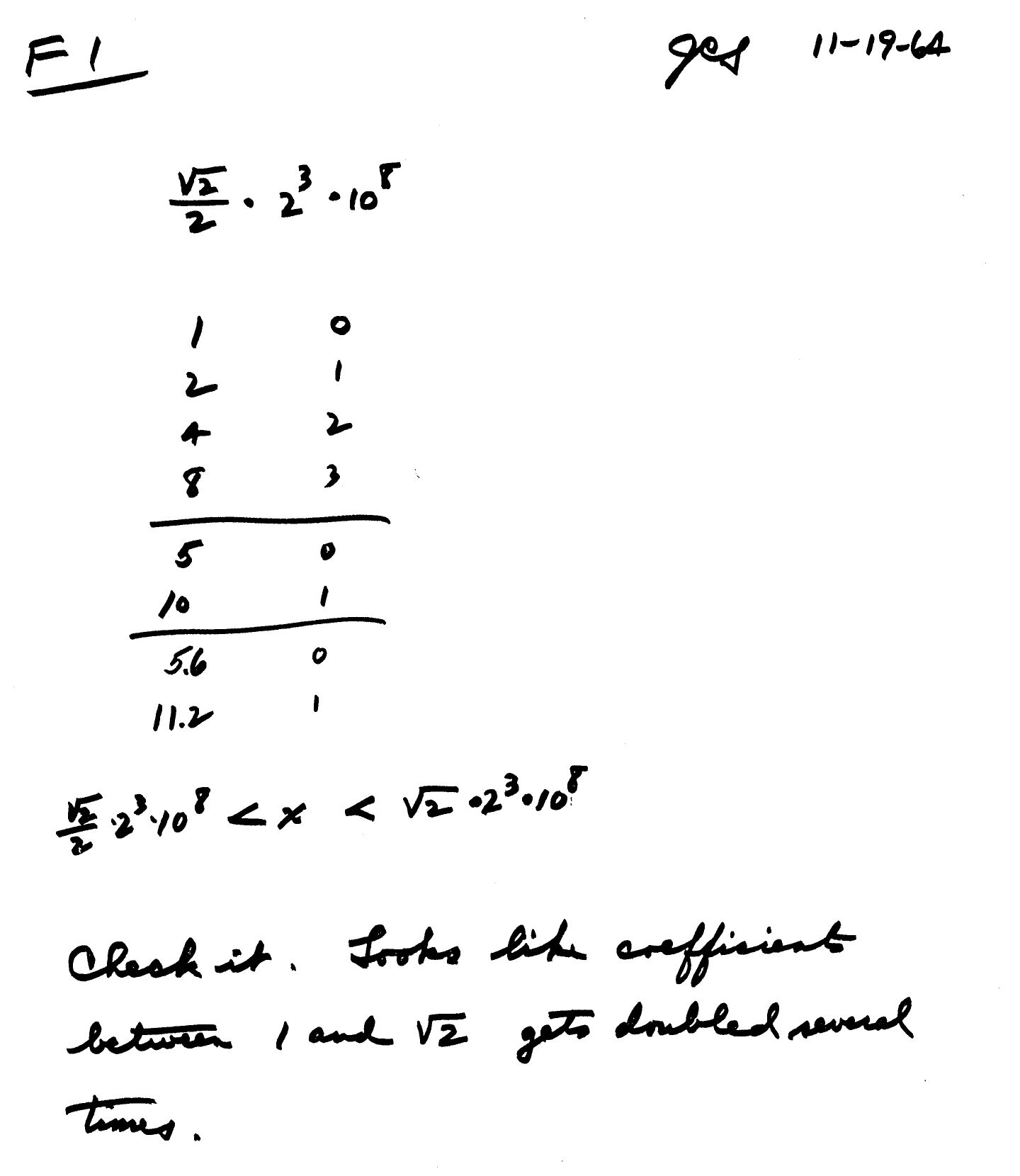
Among Shaw’s working papers there is a handwritten page headed F1, dated 11-19-64. F1 is the logarithm routine in the listing. The page works through its range reduction and ends: “Check it. Looks like coefficient between 1 and √2 gets doubled several times.” That is three months after the paper with log 2 in it. It is not the same fault. The doubling the note describes brings the number into range and works as written; the cutting off comes a few cards later.
The console runs in the browser, at a typewriter: your lines in green and JOSS’s in black, ten characters a second, and a gong when it hands the typewriter back. It is compiled from the same Rust source as the command-line version. Each of the five original sessions can be replayed there and compared with its page.
WHAT THIS DOES NOT SHOW
- The pages were read by the same coding agent that wrote the interpreter, with sub-agents doing the measuring. No person has checked the transcriptions against the scans by eye; a second model, OpenAI’s Codex, spot-checked twenty places independently. The pages are in the repository so that somebody can.
- The column rules were set from these pages, so their matching is partly the reconstruction being fitted to them. The digits were not fitted: they come out of the arithmetic, which for logarithms, exponentials and powers follows JOSS’s own routines. Those routines are a reading of the listing, checked against a small emulator built from the same reading, not a run of the original program.
- Matching five sessions says nothing about what they do not exercise. Stop and Cancel, most of the forty messages, and what happens when a step is deleted from under a loop are built from the listing and Shaw’s notes, and no page shows them.
- The sine, cosine and arg here are a modern library’s, rounded to nine digits. JOSS’s own routines for them are in the listing and have not yet been followed.
- The messages were decoded by machine from a scan of a printed listing. Each was checked against the capitals printed beside it, which have no small letters and no ≤.
- A second model, OpenAI’s Codex, reviewed the repository independently. Besides the spot check, it found that large powers could come out as zero, that Form would not take an expression, and that the listing answers arg(0,0) where the reconstruction had made a message up; these follow the listing now. Its review, and what was done about each point, is in the repository.
- Where no page of 1964 shows a message, the 1964 setting uses the words of 1965. How much storage each step, value and level of a task takes is an estimate.
- This is the JOSS of the JOHNNIAC. The later JOSS on the PDP-6 is a larger language and is not here. Nor are the punched cards, the sign-on, or the other seven users.
A manual tells you what a system was meant to do. A page it typed tells you what it did, mistakes included.
How much of a conversation survives on paper?
The pages keep what was typed, by whom, and in which column. They do not keep the gong that rang when JOSS handed the typewriter back, the half second it took to fetch your work from the drum, or what it was like to be told “Eh?” by a machine in 1965. A reconstruction that matches the page has matched the part that was written down.
Thematic notebook / Published record
Closing thought
Five console sessions printed in RAND’s papers of 1964 and 1965, typed again on a reconstruction of JOSS, come out the same on all 767 lines. Five of them, one unit in the last digit of a logarithm, an exponential or a power, come out right only when JOSS’s own routines are followed from its 1965 listing: its logarithm cuts off where it should round.